30+ Years Experience
Honest, Clear Pricing
5.0★ Rating
All Makes & Models

5.0 (Verified Reviews)

Local Nissan Brake Specialist In Kirrawee

Expert Nissan brake servicing and repairs in Kirrawee. We inspect, diagnose, and fix brakes properly so you stop safely. Book Your Free Inspection.

Expert Diagnostics

Honest Advice

5.0★ Rating

Nissan Brake Diagnostics

Book Your Free Inspection

Fill in the form and we'll be in touch to confirm your booking.

Booking Form
  • Vehicle Details
  • Confirm Vehicle
  • Services
  • Contact Details
No Upselling
Fair, Clear Pricing
Local & Experienced

Why Book With Us

Book Your Free Inspection
Drop Off Your Car
We Get to Work
Back on the Road

Brake performance is non-negotiable on Australian roads, and Nissan vehicles have their own brake architecture and servicing requirements. A Nissan brake specialist in Kirrawee understands how your vehicle’s braking system is engineered and what keeps it safe and responsive. Whether you’re driving a Navara, Qashqai, X-Trail, or Altima, your brakes deserve technicians who know the specific diagnostics, parts specifications, and service intervals that Nissan recommends.

How to Tell Your Nissan Brakes Need Attention

Brake problems rarely announce themselves with a single obvious sign. Instead, listen and feel for changes in how your Nissan stops.

  • Soft or spongy brake pedal that requires more pressure than usual to stop the vehicle
  • Brake pedal goes nearly to the floor before the brakes engage
  • High-pitched squealing or grinding noise when braking, especially when the vehicle is cold
  • Brake pads visibly worn down when you inspect the wheels (less than 3mm thickness is a warning sign)
  • Pulsing or vibration through the pedal when braking, often caused by uneven rotor wear
  • Warning light on your dashboard (check your Nissan’s instrument cluster for brake system alerts)
  • Longer stopping distances than normal, or the vehicle pulling to one side under braking

Any of these symptoms means your brakes need professional inspection soon. Nissan’s braking systems are designed to be predictable and responsive, so a change in feel or noise is your car telling you something is wrong.

What a Nissan Brake Inspection and Service Involves

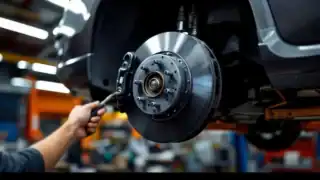
We start every brake job with a thorough inspection. Our diagnostic equipment lets us measure pad thickness, check rotor runout and thickness, and test brake fluid condition. For Nissan vehicles, we follow the manufacturer’s service specifications, which vary depending on your model and driving conditions.

Here’s what happens during a typical brake service on a Nissan:

Pad and rotor assessment. We measure pad material remaining and inspect rotors for scoring, warping, or uneven wear. Nissan’s OEM pads are engineered to work with your vehicle’s specific braking pressure and rotor design, so we use genuine Nissan parts or equivalent aftermarket pads that meet the same specifications.

Brake fluid check. Nissan brake systems use DOT 3 or DOT 4 fluid depending on the model year. Brake fluid absorbs moisture over time, which reduces braking efficiency and can cause corrosion inside the system. We test the fluid condition and replace it if contamination is detected, following Nissan’s maintenance intervals.

Caliper and hose inspection. Seized calipers, leaking brake lines, and damaged hoses reduce braking power and can cause uneven pad wear. We clean and inspect calipers, replace seals if needed, and check all hoses for cracks or bulges.

Brake system bleeding. If we’ve opened the system or replaced fluid, we bleed air from the lines to restore full braking response. This is especially important on Nissan’s anti-lock brake (ABS) systems, where trapped air can trigger warning lights and reduce effectiveness.

ABS and brake warning light diagnostics. Modern Nissans have ABS sensors and brake system electronics. If your warning light is on, we use diagnostic scanning to read the fault code, identify the root cause, and fix it correctly rather than guessing.

Cost and Timeframe Factors for Nissan Brake Work

Brake costs depend on which components need replacement and whether we’re using genuine Nissan parts or quality aftermarket equivalents that meet OEM specifications.

Pad replacement alone on a Nissan typically takes 30 to 60 minutes per axle if rotors are acceptable. Rotor replacement adds time and cost, but is often necessary if the rotor has been scored or worn unevenly by damaged pads. Older Nissans (10+ years) may have corrosion in the brake lines or calipers, which increases labour time.

Brake fluid replacement depends on how long it’s been since the last service and the condition we find when we inspect it. ABS sensor or caliper replacement on newer Nissans requires more specialist work and parts availability can vary.

We always give you a clear, itemised breakdown before starting work so you understand what’s needed and why. No surprises, no upsell pressure.

Why Choose Shire Tune & Service for Your Nissan Brake Service in Kirrawee

We’ve been servicing Nissan vehicles in the Sutherland Shire for over 18 years. Our technicians have hands-on experience with the full range of Nissan models and years, from work utes to family SUVs. We have up-to-date diagnostic equipment that reads Nissan’s ABS and brake warning codes accurately, so we fix the actual problem instead of replacing parts that don’t need replacing.

We use genuine Nissan parts where they’re the right choice, and quality aftermarket parts that match OEM specifications where they offer better value without compromising safety. Your manufacturer warranty is protected by our work because we follow Nissan’s service schedules and use approved components and procedures.

Brakes are safety-critical, and we treat them that way. You’ll get honest advice, fair pricing, and a brake system you can trust.

Ready to Get Your Nissan Brakes Sorted

If your Nissan is showing any brake symptoms or you’re due for a service, Call Us Today to discuss what your vehicle needs. If you’d prefer to book online, use our booking system to Book Your Free Inspection at our Kirrawee workshop. We’ll check your brakes thoroughly and give you a clear plan before any work starts.

Other Services

Whatever your needs we have you covered, see some similar services below or click "See All Services" to explore our full service offering.

Your Trusted Local Mechanic in Kirrawee

We've been looking after cars in Kirrawee and the Sutherland Shire for over 18 years. Owner-operated, honest to the core, and equipped to handle European and Japanese vehicles properly.

30+ Years of Hands-On Experience

Deep experience across European and Japanese makes means faster, more accurate diagnosis.

Honest Pricing, No Surprises

Bring your vehicle in and we’ll assess it and explain exactly what’s needed.

Nissan Brake System Warranty

All brake work backed by warranty, protecting your Nissan’s safety and resale value.

How Nissan Brake Repair Works

Straightforward Nissan brake service from booking through to safety verification and vehicle handover.

Step 1

Book Your Free Inspection

Book your free inspection to assess your Nissan brakes and understand what repairs are required.

Step 2

Nissan Brake System Inspection

We measure pad thickness, rotor condition, and fluid integrity using Nissan-compatible diagnostic procedures.

Step 3

Precision Brake Repair

We replace pads, rotors, or fluid to Nissan specification and bleed the system to OEM standards.

Step 4

Safety Check and Handover

We test-drive your Nissan, confirm braking performance meets safety standards, then hand it back ready.

What Our Customers Say

5.0 (Verified Reviews)

Quality Parts From Trusted Suppliers

We source parts from reputable suppliers to keep your vehicle running reliably. Quality components, fitted right the first time.

Book Your Free Inspection

Fill in the form and we'll be in touch to confirm your booking.

Booking Form
  • Vehicle Details
  • Confirm Vehicle
  • Services
  • Contact Details
No Upselling
Fair, Clear Pricing
Local & Experienced

Why Book With Us

Book Your Free Inspection
Drop Off Your Car
We Get to Work
Back on the Road

Got Questions? We Have Answers

Browse the answers below to find what you need. If your question isn't listed, give us a call and we'll sort it out.

A Nissan Brake Specialist understands the specific brake systems, hydraulic layouts, and component tolerances across different Nissan models. We use diagnostic equipment that reads Nissan-specific fault codes and know common wear patterns in Nissan braking systems. This means faster diagnosis, the right parts first time, and work tailored to your vehicle rather than a one-size-fits-all approach. We’ve serviced Nissan brakes locally in Kirrawee for years and know what to expect from each generation.

Most Nissan owners get their brakes inspected annually or every 20,000 kilometres, whichever comes first. Your logbook will specify the manufacturer’s recommendation for your model year. If you do a lot of city driving with frequent braking, or tow a trailer, your pads and rotors will wear faster. We can review your driving patterns and check your brakes during a routine service to give you a clearer picture of what’s ahead.

Stop and get your brakes checked immediately if you hear grinding, experience a soft or spongy pedal, notice the brake warning light on your dash, or feel your brakes pulling to one side. Grinding typically means pad material is gone and the rotor is being damaged. A soft pedal suggests air or moisture in the hydraulic system. These are safety issues that can worsen quickly and put you and others at risk. Don’t delay on any of these.

We inspect your pads, rotors, calipers, brake fluid, and hoses for wear and damage. If pads are low, we replace them and machine or replace rotors as needed. We check that your calipers are moving freely and your brake fluid is clean and at the right level. If fluid is discoloured or old, we flush and refill it with fresh fluid. You’ll get a full rundown of what we found and what work was done before you leave.

Not inherently, but some Nissan models do have heavier front-end weight distribution, which puts more demand on front brake pads. Newer Nissan models with regenerative braking systems have different wear patterns altogether. Driving style, terrain, and road conditions matter far more than the brand. We can tell you where your particular Nissan sits in the wear spectrum once we inspect it.

Generally, Australian consumer law under ACCC guidance does not require you to use a dealership to maintain your manufacturer warranty, provided the work is done properly by a qualified mechanic using appropriate parts. Independent workshops can service your brakes and stamp your logbook just as a dealership would. We recommend checking your specific warranty documents or contacting your Nissan dealer if you have concerns, but in most cases independent servicing with genuine or OEM-equivalent parts protects your coverage.

A straightforward brake pad replacement typically takes 1 to 2 hours depending on which wheels need work and whether we find any complications with rotors or calipers. If rotors need resurfacing or replacement, add another hour or so. We’ll assess the job when you bring the car in and let you know what to expect. Most brake jobs can be done same-day, so you’re not without your vehicle for long.

We use genuine Nissan parts where they’re the best option for durability and fit, and OEM-equivalent quality parts where they meet or exceed Nissan specifications at a more competitive price. For brake components, we never compromise on quality or safety. Every part we install carries a warranty and is designed to work with your Nissan’s specific brake system. We’ll always discuss your options upfront so you know exactly what you’re getting.

Rotor resurfacing removes a thin layer of metal to restore a smooth, flat surface when brakes are pulsing or slightly uneven. Replacement is necessary when the rotor is too thin, cracked, severely scored, or has lost too much material to resurface safely. Resurfacing costs less and takes less time, but doesn’t work if the rotor is damaged beyond repair. During your inspection, we’ll measure your rotors and recommend whichever option actually makes sense for your safety and budget.

A soft pedal usually means air has entered the brake hydraulic system or your brake fluid is contaminated with moisture. Air compresses easily, so the pedal sinks further before the brakes engage. This is a safety issue and needs attention straight away. We’ll bleed your brakes to remove air and replace the fluid if it’s contaminated. In rare cases, a failing master cylinder or caliper seal is responsible. A proper inspection tells us exactly what’s happening so we can fix it properly.

Continue to site