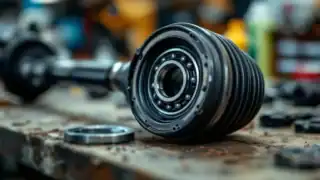
A tailshaft connects your Jeep’s transmission to the rear differential, transferring engine power to the wheels. When a tailshaft develops problems, your vehicle can lose power delivery, vibrate severely, or fail to move altogether. Jeep tailshaft repair is a critical service that restores safe, reliable power transmission. We diagnose and repair tailshaft faults using the same precision that larger franchised workshops use, but without the dealership price tag. Here in Kirrawee, we’ve spent over 18 years perfecting our approach to Jeep-specific drivetrain work.
What Are the Warning Signs of Tailshaft Damage?
Most drivers notice tailshaft issues before they become catastrophic. Common warning signs include a loud metallic clunking when shifting between drive and reverse, especially noticeable in automatic Jeeps. You might also feel a shudder or vibration that runs through the steering wheel and floor, particularly during acceleration or when turning. Some owners report that their Jeep hesitates to move smoothly from a standstill, as if something is catching between the engine and wheels.
In some cases, you’ll see visible damage underneath the vehicle: oil leaking from the tailshaft itself, torn rubber mounting boots that should be flexible and intact, or obvious corrosion where the shaft connects to the differential. A grinding or squeaking noise that worsens over time is another red flag. Don’t ignore these signs. A failing tailshaft can cause sudden loss of power while driving, which creates a real safety risk. If you notice any of these symptoms, bring your Jeep in for diagnosis rather than continuing to drive with the fault unaddressed.
How We Diagnose Jeep Tailshaft Problems
Diagnosing a tailshaft fault requires more than a quick visual check. We start by listening to exactly when the noise or vibration occurs and what conditions trigger it. This helps us narrow down whether the fault is in the shaft itself, the universal joints (the flexible couplings that allow the shaft to move), the centre bearing, or the mounting bushes.
Next, we get the Jeep on our hoist and inspect the tailshaft assembly thoroughly. We look for play in the joints, cracks in the shaft, wear in the rubber mounts, and signs of previous impact or corrosion. For Jeep models with two-piece tailshafts (common in longer-wheelbase models like the Cherokee and Wrangler), we check the centre bearing support and the rubber bush that isolates vibration. We also inspect where the shaft connects to the transmission output flange and the differential pinion flange, as these joints are high-stress points that wear under load.
If the fault isn’t immediately obvious, we use diagnostic lifting and rotation techniques to feel for play, stiffness, or grinding. Some modern Jeep models benefit from specialist scanner tools that can identify transmission or differential issues that might contribute to tailshaft symptoms, and we have that equipment on hand. This level of diagnosis prevents guesswork and ensures we only replace parts that actually need replacing.
What Repair Options Are Available?
The repair approach depends on what’s actually broken. If the issue is worn universal joints, we can often replace just those couplings without replacing the entire shaft, which costs less and takes less time. Rubber mounting bushes are straightforward to replace and often restore smooth, quiet operation immediately.
If the shaft itself is bent, cracked, or has excessive wear in its journals, replacement is the safest option. For Jeep vehicles, we use genuine OEM-equivalent tailshafts or quality aftermarket replacements that meet manufacturer specifications. We never fit cheap, unknown components to a power transmission part. The shaft must spin true and handle your Jeep’s torque safely, and we stand behind every part we install.
On some Jeeps, particularly those with higher mileage or a history of heavy towing, the centre bearing can wear and cause vibration. This is a wear item we can address during tailshaft service. We’ll discuss which components need replacement and which can be safely monitored.
Cost and Time: What Affects the Price of Jeep Tailshaft Repair?
Several factors influence the final cost of Jeep tailshaft repair. The first is the extent of damage. Replacing worn universal joints alone is far cheaper than replacing the entire shaft assembly. Parts availability also matters; some Jeep models have tailshafts that are readily stocked, while others need to be ordered, which extends the job timeline.
Your choice of parts affects cost too. We can source genuine Jeep components or quality equivalents that meet OEM standards at a lower price point. We’ll always discuss this with you upfront so you know what you’re paying for. Labour time ranges from a few hours for joint replacement to a full day for a complete tailshaft swap, depending on how much the old components need to come apart and whether anything else needs attention while we’re in there.
We’re transparent about pricing. You’ll never be surprised by a bill that’s double the estimate. We inspect your tailshaft properly, tell you what’s worn, explain your options, and let you decide what repair level you’re comfortable with. That honesty is core to how we’ve built trust across Kirrawee and the surrounding suburbs.
Why Shire Tune & Service for Jeep Tailshaft Repair
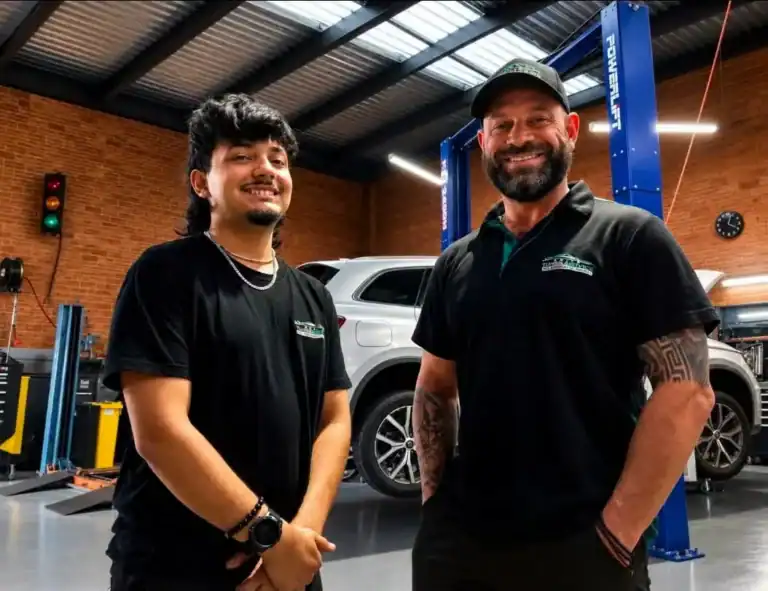
We’ve been servicing Jeep vehicles and other makes across the Sutherland Shire for over 18 years. Tailshaft work is precise, and it requires diagnostic skills and proper equipment, not just mechanical strength. We have up-to-date diagnostic tools and the hands-on experience to spot problems others might miss. Our owner-operator approach means you speak to the person who’ll actually work on your Jeep, and that continuity matters when diagnosing something tricky.
We specialise in European and Japanese vehicles, but we service all makes including Jeep. We use genuine parts where they’re important for reliability and warranty protection, and we’re honest about when an aftermarket alternative is just as good. We don’t upsell unnecessary work or recommend repairs you don’t need. Over 30 years of combined hands-on experience across the workshop means we know Jeep drivetrains inside out.
Book Your Jeep Tailshaft Inspection Today
If your Jeep is shuddering, clunking, or vibrating, a tailshaft fault could be the cause. Call Us Today or Book Your Free Inspection to get your vehicle diagnosed accurately. We’ll explain your repair options in plain language and provide honest advice about what needs fixing now and what can wait. Serving Kirrawee and the wider Sutherland Shire, we’re here to get your Jeep back to reliable, smooth power delivery.