Mercedes brake systems demand precision and attention to detail that goes beyond standard brake work. When your Mercedes needs brake replacement in Kirrawee, you’re not just replacing wear items — you’re maintaining one of the most critical safety systems on a vehicle engineered to exacting German standards. Mercedes brakes are designed to perform consistently across a wide range of driving conditions, and when they start to show signs of wear, early attention prevents more expensive damage down the track and keeps your car safe.
When Do You Need Mercedes Brake Pad and Rotor Replacement?
Most Mercedes owners will need brake pad replacement every 40,000 to 80,000 kilometres, depending on driving habits and road conditions around the Sutherland Shire. Brake rotors typically last longer but often need replacement at the same time as pads, especially if your driving involves frequent braking or longer downhill stretches.
Watch for these warning signs:
- A high-pitched squealing sound when braking, particularly in the morning or after the car has been parked overnight.
- A soft or spongy brake pedal that requires more pressure than usual to slow the car.
- Reduced braking power or a longer stopping distance than normal.
- A grinding noise when applying the brakes, which signals that pad material has worn away completely.
- Visible wear indicators or warning messages on your Mercedes dashboard (many models display brake wear status electronically).
- Vibration or pulsation felt through the pedal when braking, which usually indicates rotor damage or uneven wear.
Brake fluid condition is equally important on Mercedes models. Over time, brake fluid absorbs moisture and becomes less effective, which is why many Mercedes service schedules recommend fluid inspection or replacement every two years regardless of kilometre reading.
Mercedes-Specific Brake Diagnostics and Inspection
Mercedes brake systems vary significantly across model lines. Older models use conventional hydraulic systems, while newer C-Class, E-Class, and larger models often feature advanced ABS, electronic stability control, and regenerative braking integration (particularly in hybrid models). Our diagnostic process accounts for these differences.
When you bring your Mercedes in for brake replacement, we start with a full system inspection using modern diagnostic equipment that reads Mercedes-specific fault codes. This tells us exactly what’s happening with brake sensors, ABS modules, and hydraulic pressure. We measure brake pad thickness, inspect rotor surfaces for scoring or cracking, and check brake fluid condition. For models equipped with electronic parking brakes, we verify that the system is functioning correctly.
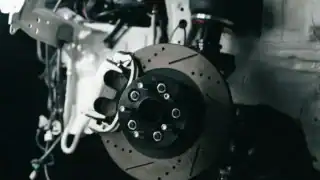
Mercedes often uses larger diameter rotors and multi-piston calipers compared to standard vehicles, which means brake components are engineered for higher performance and greater thermal demands. Replacing them with correct specification parts ensures your brakes maintain their designed stopping power and durability. We use brake parts that match Mercedes engineering standards, whether that’s genuine Mercedes components or high-quality alternatives that meet OEM specifications.
What Happens During Mercedes Brake Replacement
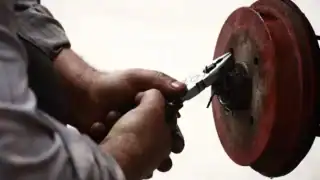
A complete Mercedes brake replacement involves removing the wheel, unbolting the caliper, and inspecting the entire assembly. We clean and inspect caliper pistons, replace seals if needed, and install new brake pads with shims and anti-rattle hardware correctly positioned. Rotors are either resurfaced (if within thickness specifications) or replaced entirely. We check brake hose condition for cracks or leaks and verify brake line connections are tight and free from corrosion.
For Mercedes models with electronic brakes or regenerative systems, we verify that all sensors and warning systems reset properly after replacement. The brakes are then tested to ensure even pressure distribution, smooth operation, and correct pedal feel before your car leaves our workshop.
Cost and Timeframe for Mercedes Brake Work
Cost depends on several factors: whether it’s front, rear, or all-wheel brake replacement; rotor condition; caliper service requirements; and whether you choose genuine Mercedes parts or quality alternatives. Brake pad replacement alone typically takes 1 to 2 hours per axle. Full rotor and pad replacement takes longer and may require additional time if calipers need servicing or if your model uses electronic parking brakes.
Parts availability is rarely an issue for common Mercedes models in the Sutherland Shire, but we’ll confirm lead times upfront. Labour costs reflect the complexity of your specific model and the care required to preserve brake system calibration and warranty protection.
Why Choose Shire Tune & Service for Mercedes Brake Replacement in Kirrawee
We’ve spent over 30 years working on European and Japanese vehicles, with more than 18 years servicing Mercedes owners right here in Kirrawee and across the Sutherland Shire. We invest in up-to-date diagnostic equipment specifically because Mercedes systems require precision scanning — we don’t guess, we measure. You’ll get honest advice about what your brakes actually need, never pressure to replace parts that still have life left or upselling of unnecessary work.
Your Mercedes deserves parts and workmanship that protect its value and performance. We use genuine or equivalent-specification brake components and ensure every job is completed to standards that meet manufacturer requirements. That means your warranty stays intact and your brakes perform as designed.
Book Your Mercedes Brake Inspection Today
If you’ve noticed brake noise, a soft pedal, or warning lights, don’t delay. Brake safety is non-negotiable. Call Us Today to discuss your Mercedes braking concerns, or Book Your Free Inspection at our Kirrawee workshop. We’ll diagnose the issue and give you a clear picture of what needs to happen next, with no surprises.