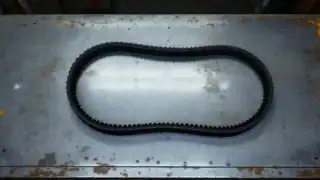
A CV axle (constant velocity axle) is the shaft that connects your engine’s power to your wheels while allowing them to move up and down with suspension and turn side to side. On Japanese vehicles, CV axles are engineered to handle the torque and flex demands of front-wheel drive systems common in models from Toyota, Honda, Mazda, Nissan, Subaru, and Mitsubishi. When a CV axle fails or the protective rubber boots tear, you lose power delivery to one wheel, and the joint itself can seize or collapse. Japanese vehicles CV axle replacement is not something to delay if you notice warning signs, and at Shire Tune & Service in Kirrawee, we see this work regularly enough to know the early symptoms and common failure points across different makes.
Warning Signs Your CV Axle or CV Joint Needs Attention
The most obvious symptom is a loud clicking or popping sound when you turn a corner, especially under acceleration. That noise comes from a worn CV joint (the ball-and-socket assembly inside the axle) that’s lost its lubricant because the rubber boot has split. You might also notice a vibration through the steering wheel or the floor when accelerating in a straight line, or a feeling that one front wheel is not gripping properly during cornering.
- Clicking or clunking sounds when turning, particularly at full lock
- Vibration or shuddering during acceleration
- Visible split, cracking, or torn rubber boot (inspect both ends of the axle)
- Grease splatter on the inside of the wheel or tyre
- Loss of traction or feeling of wheel slip during tight turns
- Vehicle pulls slightly to one side under power
On Japanese vehicles, the boots often fail before the joint itself, which is why early inspection matters. A torn boot exposes the joint to moisture and dirt, and once that happens, the joint degrades quickly. If you ignore a split boot, you’ll end up replacing the entire CV axle assembly rather than just re-booting it (if caught early enough on some models).
What Happens During a Japanese Vehicles CV Axle Inspection and Replacement
We start by lifting the vehicle safely and spinning the wheels by hand to feel for play or roughness in the joints. We also rotate the steering through full lock to listen for clicking under load. Many Japanese models have two CV axles (one per front wheel), and we check both, even if only one is symptomatic, because the other is often not far behind.
If the joint is seized or the clicking is pronounced, replacement is the best path. Japanese vehicle CV axles are labour-intensive to remove because they’re often bolted or splined to the transmission output shaft and wheel hub simultaneously. We disconnect the wheel bearing, suspend the caliper and brake disc safely, remove the axle nut (which is usually locked with a pin or tab washer specific to your model), then carefully extract the axle from the transmission and hub. On some Subaru and Nissan models, the process is more involved because the inner CV joint is splined directly into the differential, and you need to be careful not to damage the transmission seals during removal.
Once the old axle is out, we fit a genuine or quality equivalent CV axle matched to your specific Japanese vehicle model and year. The new axle is re-installed in reverse, with the nut torqued to manufacturer specification and properly locked. We then test drive the vehicle to confirm the clicking has stopped and steering response is smooth.
If the CV boot alone is torn but the joint is still quiet and smooth, we can sometimes replace just the boot and re-pack the joint with fresh grease. This is a cost-effective option on some models, but labour is still significant because the axle must be partially removed to access both boot clamps.
Cost and Time Factors for CV Axle Work
The cost of a Japanese vehicles CV axle replacement depends on a few variables. Whether you need one axle or both makes a real difference. The complexity of removal varies by model: a Honda or Toyota is generally more straightforward than a Subaru with all-wheel drive, which involves both the transmission and differential. Parts availability also matters. Original equipment manufacturer (OEM) axles from Toyota, Honda, or Nissan are generally available within a day or two, but some performance or specialty models may take longer. We can source quality aftermarket alternatives that meet OEM specifications if lead time is tight and cost matters to you.
Labour time ranges from 1.5 to 3 hours per axle, depending on access and whether the vehicle needs alignment checks afterward. We’re transparent about these variables upfront, so you understand what you’re paying for before we start.
Why Choose Shire Tune & Service for Japanese Vehicle CV Axle Work in Kirrawee
We’ve been servicing Japanese vehicles for over 18 years right here in Kirrawee, and we specialise in Honda, Toyota, Mazda, Nissan, Subaru, and Mitsubishi. We have the diagnostic tools and lift facilities to properly inspect CV joints without guesswork, and we know the common failure patterns across different models. When we replace a CV axle, we use genuine parts or quality equivalents matched to your vehicle’s specification, and we fit them correctly to protect your manufacturer warranty. You won’t be pushed into unnecessary work or convinced to replace something that’s still serviceable. If a boot can be replaced at lower cost, we’ll tell you that. If the joint itself is damaged and needs replacing, we’ll explain why.
Our approach is straightforward: honest assessment, fair pricing, and work that’s done right the first time. Over 30 years of hands-on experience means we’ve seen every variation of CV axle failure, and we bring that knowledge to every Japanese vehicle that comes through the door in Kirrawee.
Next Steps
If you’ve noticed clicking when cornering or grease on your wheel, we’re ready to help. Book Your Free Inspection to have the CV joints properly assessed, or Call Us Today to discuss your Japanese vehicle’s symptoms with our team.