30+ Years Experience
Honest, Clear Pricing
5.0★ Rating
All Makes & Models

5.0 (Verified Reviews)

Trusted Hyundai Suspension Specialist In Kirrawee

We diagnose and repair Hyundai suspension issues in Kirrawee using specialist diagnostic tools. Safe, reliable handling starts with proper suspension work. Book your free inspection.

Expert Diagnostics

Honest Advice

5.0★ Rating

Hyundai Suspension Experts

Book Your Free Inspection

Fill in the form and we'll be in touch to confirm your booking.

Booking Form
  • Vehicle Details
  • Confirm Vehicle
  • Services
  • Contact Details
No Upselling
Fair, Clear Pricing
Local & Experienced

Why Book With Us

Book Your Free Inspection
Drop Off Your Car
We Get to Work
Back on the Road

Hyundai suspension systems are engineered for smooth, responsive handling across Australian roads, but they’re not immune to wear. A Hyundai Suspension Specialist in Kirrawee can diagnose and repair suspension issues before they compromise safety or turn a minor rattle into an expensive failure. Whether you’re experiencing a clunking noise over bumps, a vehicle that sits lower on one side, or steering that feels vague and loose, suspension problems need attention from someone who understands Hyundai’s design and common failure points.

What Are the Warning Signs Your Hyundai Suspension Needs Attention?

Suspension wear rarely announces itself all at once. Instead, you’ll notice small changes in how your Hyundai drives and handles. Learning to spot these signs early means catching problems before they worsen.

  • A clunking or knocking sound when driving over bumps or potholes
  • The vehicle leans or sags noticeably to one side, especially when parked
  • The steering wheel feels loose, unresponsive, or pulls to one side
  • Excessive bouncing after hitting a bump, or the car doesn’t settle smoothly
  • Uneven tyre wear, particularly at the inner or outer edges
  • A squeaking noise from the front or rear suspension during turns
  • The ride feels noticeably rougher than it did before, with every impact jarring through the cabin

Many Hyundai owners don’t realise how much suspension condition affects braking distance, tyre life, and steering precision. A suspension system in decline reduces your vehicle’s stability on wet roads and increases stopping distance. If you’ve noticed any of these symptoms driving around Kirrawee or the wider Shire, a professional inspection is the logical next step.

How Hyundai Suspension Diagnosis Works

Our approach to Hyundai car suspension assessment combines hands-on inspection with diagnostic equipment designed to catch issues that a visual check alone might miss. Hyundai models from recent generations use a mix of traditional coil-spring and strut designs, and we’re familiar with the specific wear patterns and failure points across the current range.

We start with a test drive to feel how the vehicle responds to steering input, braking, and cornering. Then we lift the car and inspect each component systematically: struts and dampers for leaks or damage, control arm bushings for wear, ball joints for play, and anti-roll bar links for cracks or looseness. We check tyre condition and alignment angles, since poor suspension geometry accelerates tyre wear and can mask underlying faults.

For more complex issues, we use specialist diagnostic equipment to measure suspension geometry and identify whether replacement or adjustment is needed. Hyundai’s service documentation specifies exact specifications for ride height and wheel alignment angles. We follow those specs precisely, so your vehicle handles as Hyundai intended and your tyres wear evenly.

Common Hyundai Suspension Issues and What They Involve

Certain components wear faster on Hyundai models than others, depending on age and driving conditions. The Shire’s mix of urban streets and longer highway runs puts consistent demands on suspension systems.

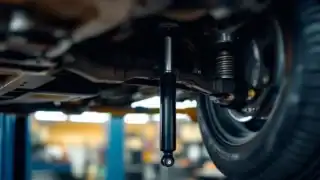
Strut and damper wear is one of the most common repairs. Hyundai dampers typically show signs of fatigue after 80,000 to 100,000 kilometres. Worn dampers lose their ability to control bounce, which you’ll feel as a spongier, less controlled ride. Replacement usually involves removing the wheel, unbolting the strut, and fitting a new OEM-equivalent unit. We always replace both sides to ensure balanced handling, even if only one side shows obvious wear.

Control arm bushings deteriorate from road salt, UV, and constant flexing. They create that knocking sound you hear over bumps as the arm develops play in its mounts. Depending on the extent of wear, bushings may be replaceable separately or the entire arm may need replacement. Hyundai parts systems make this straightforward, and sourcing genuine or OEM-equivalent parts is reliable.

Anti-roll bar links often crack or separate, especially on vehicles that encounter frequent rough roads or harsh cornering. The symptom is usually a clunk when turning, as the link loses tension. These are relatively quick replacements but critical for keeping the vehicle stable during cornering.

What Affects Repair Cost and Timeframe

Suspension work varies significantly in scope and parts cost depending on what’s worn. A strut replacement on one axle takes a few hours and depends mainly on parts availability. Control arm replacement might take longer if bolt corrosion makes removal difficult. We always advise you of what we’ve found before proceeding, so you know exactly what you’re paying for and why.

Labour time depends on the specific components involved and whether we uncover additional wear during inspection. Parts availability for Hyundai suspension components is generally reliable through OEM channels and quality aftermarket suppliers, so we can usually source parts quickly. We use genuine Hyundai parts or tested OEM-equivalent alternatives that meet Hyundai’s original specifications, ensuring your vehicle’s suspension performs as designed without voiding manufacturer warranty protection.

If you’re uncertain whether a suspension repair is urgent or can wait, we’re happy to advise. Some issues like a minor rattle can often be monitored, while others like a leaking strut or excessive steering play warrant prompt attention to avoid safety risks.

Why Shire Tune & Service Handles Hyundai Suspension Repairs

We’ve spent over 30 years working on suspension systems across all makes, and 18 years servicing Hyundai owners right here in Kirrawee. We have the diagnostic equipment to pinpoint faults accurately, which saves you money by avoiding unnecessary parts replacement. Our technicians understand Hyundai’s engineering and common wear patterns, so we inspect thoroughly and explain findings plainly.

We source genuine parts that protect your vehicle’s warranty and long-term reliability. Our pricing sits between dealership rates and budget quick-fit operators. You get dealer-quality diagnostics and parts without the dealership markup or the pressure to replace more than necessary. We’re a local owner-operator workshop, not a franchised chain, so every repair reflects our reputation in the Shire.

If you’d like a full suspension inspection before deciding on repairs, call us today or book your free inspection online. We’ll give you honest advice about what needs attention and what can wait, and you’ll drive away knowing your Hyundai is handling safely.
Other Services

Whatever your needs we have you covered, see some similar services below or click "See All Services" to explore our full service offering.

Your Trusted Local Mechanic in Kirrawee

We've been looking after cars in Kirrawee and the Sutherland Shire for over 18 years. Owner-operated, honest to the core, and equipped to handle European and Japanese vehicles properly.

30+ Years of Hands-On Experience

Deep experience across European and Japanese makes means faster, more accurate diagnosis.

Honest Pricing, No Surprises

Bring your vehicle in and we’ll assess it and explain exactly what’s needed.

Hyundai-Specific Diagnostic Tools

We use equipment calibrated for Hyundai suspension geometry and fault codes.

How Hyundai Suspension Repair Works

From booking through to collection, we walk you through our suspension repair process step by step.

Step 1

Book Your Free Inspection

Book your free inspection to identify suspension wear, damage, or alignment issues affecting your vehicle.

Step 2

Suspension Diagnostic Assessment

We inspect springs, struts, bushes, and alignment using Hyundai procedures and measure against manufacturer tolerances.

Step 3

Precision Suspension Repair

We replace worn components with quality parts, reset geometry, and verify all work meets Hyundai safety standards.

Step 4

Test Drive and Handover

We test drive your Hyundai to confirm smooth handling, then walk you through the completed work and warranty.

What Our Customers Say

5.0 (Verified Reviews)

Quality Parts From Trusted Suppliers

We source parts from reputable suppliers to keep your vehicle running reliably. Quality components, fitted right the first time.

Book Your Free Inspection

Fill in the form and we'll be in touch to confirm your booking.

Booking Form
  • Vehicle Details
  • Confirm Vehicle
  • Services
  • Contact Details
No Upselling
Fair, Clear Pricing
Local & Experienced

Why Book With Us

Book Your Free Inspection
Drop Off Your Car
We Get to Work
Back on the Road

Got Questions? We Have Answers

Browse the answers below to find what you need. If your question isn't listed, give us a call and we'll sort it out.

A good Hyundai suspension specialist understands the specific suspension geometry and components that Hyundai uses across its range. They should have diagnostic equipment capable of reading Hyundai fault codes, access to genuine or OEM-equivalent parts, and hands-on experience with common Hyundai suspension issues like strut wear and lower arm problems. We work on Hyundai vehicles regularly and use up-to-date diagnostics to pinpoint exactly what needs attention, rather than guessing or replacing parts unnecessarily.

A thorough suspension inspection typically takes 45 minutes to an hour. We lift the vehicle, check each component for wear and damage, test steering response, and look for leaks or bent parts. If we find issues that need repair, we’ll give you a clear explanation of what’s needed before we start any work. You’ll have time to grab a coffee while we do the inspection.

Watch for clunking noises when going over bumps, a bouncy or drifting feeling while cornering, uneven tyre wear, or the car sitting lower on one side. If your steering feels vague or the vehicle pulls to one side, suspension issues could be the cause. Don’t ignore these signs as worn suspension affects your safety and causes your tyres to wear faster, which gets expensive quickly. Bring it in for an inspection if you notice any of these problems.

No. Under Australian Consumer Law, Hyundai cannot refuse warranty cover simply because you’ve had your vehicle serviced by a qualified independent mechanic rather than a dealership. However, this applies to work that’s done properly and to parts that meet the required standard. If you’re concerned about a specific warranty claim, it’s worth checking your paperwork or contacting us to discuss your individual situation and ensure any work protects your coverage.

During a suspension service, we inspect all components such as struts, springs, anti-roll bar links, control arms, and bushings for wear or damage. We check fluid levels in dampers, test steering response, and measure wheel alignment if needed. If parts need replacing, we’ll source genuine Hyundai parts or quality OEM-equivalent components and install them properly. We’ll explain what we find and only proceed with repairs you’ve approved.

Suspension components don’t need routine servicing like an oil change, but they do wear over time. We recommend a suspension inspection every 12 months or 15,000 kilometres, whichever comes first. If you drive on rough roads, tow a trailer, or notice any warning signs, inspect sooner. Catching worn struts or bushings early prevents damage to your tyres and steering, which saves money in the long run.

Yes, we can source and fit genuine Hyundai suspension parts for your vehicle. We also use quality OEM-equivalent parts where appropriate as these meet the same engineering standards as genuine parts but are often more affordable. Either way, we make sure the parts suit your Hyundai’s specification and fit properly. When you visit us in Kirrawee, we’ll discuss which option makes sense for your situation and requirements.

Hyundai suspensions typically wear from normal use as struts lose pressure over time, rubber bushings perish, and anti-roll bar links can seize. Rough roads, heavy loads, and high mileage speed up wear. Some Hyundai models are prone to lower arm issues if bushings aren’t replaced during regular maintenance. We see these patterns regularly and know where to look. A proper inspection will show exactly what’s happening with your suspension.

No, it’s not safe. Worn struts, bushings, or links affect your ability to steer and brake properly, especially in emergency situations or on wet roads. Your vehicle may also pull to one side or bounce excessively, making it harder to control. Worn suspension also causes uneven tyre wear, which can lead to tyre failure. If you suspect suspension wear, stop driving and get it inspected. Delaying repairs puts you and your passengers at risk.

A full suspension inspection includes visual checks of all suspension components for damage, cracks, or corrosion. We test dampers for fluid leaks, check tyre condition and wear patterns, measure wheel alignment, test steering response, and listen for clunking or squeaking noises. We’ll also check suspension geometry and ride height. After the inspection, we provide a detailed report of what we found and recommend any repairs needed. This gives you a complete picture of your suspension health.

The cost of suspension repair depends on which components need replacing and whether you choose genuine Hyundai or OEM-equivalent parts. Simple jobs like replacing bushings are less expensive than replacing struts or control arms. We always provide a quote before starting work so there are no surprises. To get an accurate price for your vehicle, bring it in for an inspection and we’ll explain exactly what’s needed and what it will cost.

Common signs of poor alignment include the vehicle pulling to one side when driving straight, uneven or rapid tyre wear, or a steering wheel that feels off-centre. If you notice the car drifting slightly even when you’re not turning, alignment could be the issue. Suspension wear often causes alignment problems, so we check alignment as part of a thorough suspension inspection. Proper alignment keeps your tyres wearing evenly and improves handling and fuel efficiency.

Continue to site