A Mitsubishi radiator flush is one of those maintenance tasks that doesn’t get much attention until something goes wrong. Your cooling system is responsible for keeping your engine at the right temperature, and over time the fluid inside it breaks down, collects rust particles, and loses its ability to protect against corrosion and overheating. In Kirrawee, we see Mitsubishi owners bringing in vehicles that have skipped this service, often because it’s easy to overlook. A radiator flush clears out the old, degraded coolant and replaces it with fresh fluid that’s formulated to Mitsubishi specifications, helping your engine run cooler and last longer.
Signs Your Mitsubishi Needs a Radiator Flush
The cooling system on your Mitsubishi doesn’t always announce problems loudly. Sometimes the warning signs are subtle, but they’re worth catching early. Watch for these indicators:
- Temperature gauge creeping toward the hot zone, even in normal driving conditions
- Sweet-smelling fluid leaking underneath your car or visible in the engine bay
- Discoloured coolant visible through the translucent overflow bottle (should be bright green, blue, or pink depending on Mitsubishi’s specification for your model year; murky brown or rust-coloured is a red flag)
- Heater blowing cool air instead of hot, a sign the coolant isn’t circulating properly
- Rough idle or unusual engine vibration when idling, sometimes caused by cooling-related stress on the engine
- White or milky-looking coolant, which indicates water contamination or internal corrosion
Beyond these warning signs, Mitsubishi’s service schedule recommends a coolant change every two years or 40,000 kilometres, whichever comes first, depending on your model and year. Older Mitsubishi models sometimes used conventional green coolant with a two-year lifespan; newer vehicles often use extended-life orange or pink coolants that can last longer but still benefit from periodic inspection and flushing. If you’re not sure what your Mitsubishi is due for, we can advise you during a free inspection.
What Happens During a Mitsubishi Radiator Flush
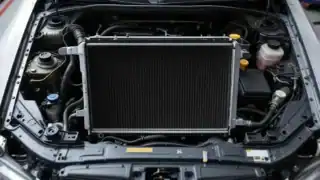
The process sounds simple but requires attention to detail and Mitsubishi-specific knowledge. We start by letting the engine cool completely, then remove the bottom radiator hose to let the old coolant drain out. While it’s draining, we inspect the radiator core for blockages, debris, or signs of internal corrosion. This is important on Mitsubishi models because some years are prone to radiator deterioration if the coolant hasn’t been maintained properly.
Once the system is empty, we flush it with clean water to remove sediment, rust particles, and any remaining contaminated fluid. We check the thermostat housing, water pump pulley, and hose connections for leaks or wear. Then we refill the system with fresh Mitsubishi-spec coolant, bleed out any air pockets (a step many quick-fit places skip, which can lead to overheating), and test the circulation to make sure everything’s flowing as it should.
The whole job takes time to do properly, but it’s straightforward once you know what you’re looking for. We use diagnostic tools to monitor coolant flow and temperature during the fill, ensuring the thermostat opens and closes correctly. On Mitsubishi models with electronic coolant-level sensors, we also verify those are reading accurately after the service.
Time and Cost Factors for Your Radiator Flush
The base radiator flush typically takes 90 minutes to two hours, depending on how easily the hoses come off and whether the system needs extra flushing cycles. Some Mitsubishi models have tighter engine bays or hose routing that takes longer to access; we’ll let you know upfront if yours falls into that category.
Cost varies based on a few factors. The coolant itself comes in different grades; Mitsubishi specifies different types for different model years, and genuine-equivalent fluids cost more than universal aftermarket coolants but offer better protection for your engine. The condition of your radiator and hoses also affects the job. If hoses are cracked or connections are corroded, those need replacing too, which adds to the time and cost. We inspect during the service and won’t surprise you with extras; we’ll show you what we’ve found and discuss options before proceeding.
Why Shire Tune & Service is Your Radiator Flush Workshop in Kirrawee
We’ve been servicing Mitsubishi vehicles locally for 18 years, and we understand the cooling system quirks across their model range. Unlike quick-fit chains that rush through the job, we pressure-test your cooling system before and after the flush to catch leaks you might not see yet. We use diagnostic equipment to verify thermostat operation and sensor readings, because an ineffective flush on top of a failing thermostat solves only half the problem.
We stock genuine and equivalent coolants that meet Mitsubishi’s specifications, not just whatever’s on the shelf. If we find a radiator that’s corroded or hoses that are cracked, we give you the facts and let you decide whether to replace them now or monitor them. Our 30 plus years of hands-on experience means we spot issues early, and our fair, transparent pricing means no hidden charges or upsells. Every job comes with honest advice about what your Mitsubishi actually needs and what can wait.
Book Your Mitsubishi Radiator Flush in Kirrawee Today
If your Mitsubishi is due for a coolant change or you’ve noticed any of the warning signs above, book your free inspection with us. We’ll check your cooling system, advise you on what’s needed, and get your car running at the right temperature again. Call Us Today or Book Your Free Inspection online.