Japanese vehicles suspension repair is one of the most important safety services you can have done. Your suspension keeps your wheels on the road, absorbs bumps, and maintains control during cornering and braking. When suspension components wear or fail, handling becomes unpredictable, tyre wear accelerates, and in severe cases, you lose the ability to steer safely. We see suspension issues regularly on Japanese vehicles right across Kirrawee and the Sutherland Shire, from Toyota and Honda models through to Mazda, Nissan, and Mitsubishi vehicles that have clocked up good mileage.
Warning Signs Your Japanese Vehicle Suspension Needs Attention
Suspension problems rarely announce themselves with a warning light. Instead, you notice how your car feels and sounds. Pay attention to these signs:
- Clunking or rattling sounds from underneath, especially over bumps or when turning
- Pulling to one side under braking or during normal driving
- Bouncing that doesn’t settle after you hit a pothole
- Uneven tyre wear, particularly on the edges or inner shoulders
- A noticeably rougher ride or increased body roll when cornering
- Steering wheel vibration or shimmy at certain speeds
- The car sitting lower on one corner than others
Some of these symptoms point directly to suspension; others indicate the suspension is compensating for a different fault. Either way, a professional inspection catches the problem early, before wear spreads to other components and repair costs climb.
How We Diagnose and Repair Japanese Vehicle Suspension in Kirrawee
Japanese vehicles have earned a reputation for reliable engineering, but suspension design and tolerances vary between makes and model generations. We know what to look for on Toyota’s double-wishbone setups, Honda’s independent front suspension, Mazda’s multi-link rear systems, and the specific wear patterns common to Nissan and Mitsubishi vehicles built for Australian conditions.
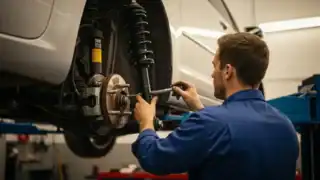
Our diagnostic process starts with a thorough physical inspection. We lift your vehicle safely, grab and twist suspension components by hand to feel for play, and check mountings for cracks or corrosion. We measure suspension geometry where it matters. We drive the vehicle to feel how it responds and narrow down whether the issue is a worn ball joint, a tired strut, a broken coil spring, worn bushes, or a combination of faults.
Japanese manufacturer logbook schedules don’t always specify suspension service intervals the way they do for oils or filters, but the components inside your suspension do wear. Bushes perish. Strut internals leak. Shock absorbers lose damping. Our inspection catches these changes before they compromise safety or accelerate wear on your tyres and brakes.
Once we’ve identified the fault, we explain exactly what needs replacing and why. If it’s a worn strut, we discuss whether to replace one or both sides (replacing only the damaged one can cause handling imbalance). If it’s bushes, we talk through whether to use OEM rubber compounds or upgraded polyurethane options that last longer. We source genuine or genuine-equivalent parts that align with Japanese manufacturer specifications, because a suspension repair that cuts corners today becomes an unsafe surprise tomorrow.
What Affects the Cost and Time for Suspension Repair
Suspension repair costs depend on which components have failed, your vehicle’s age and mileage, and how complex the disassembly is. A simple worn sway bar link might be a one-hour job. A full strut replacement on both front corners, with alignment check, takes longer. Availability of parts also matters. Japanese vehicle suspension parts are generally well-stocked in Australia, but some older or imported Japanese models may need a few days to source the right components.
We’ll always inspect both sides of the suspension and test the full system, not just the squeaky wheel. This prevents the false economy of fixing one problem while another waits to fail. Labour time varies honestly depending on what we find; we won’t pretend a straightforward repair will take a week, and we won’t underestimate a complex job and leave you stranded later.
Why Shire Tune & Service Handles Japanese Vehicle Suspension Repair the Right Way
We’ve been servicing Japanese vehicles locally for over 18 years, and we specialise in the diagnostics and repair work that Japanese makes need. We use up-to-date diagnostic equipment to read suspension-related fault codes and sensor data. We understand Japanese engineering—the tolerances, the OEM parts quality, and what happens when suspension components wear on Australian roads with potholes, rough surfaces, and salt air near the coast.
We don’t upsell suspension work. We tell you what’s genuinely unsafe and what can wait. We use genuine or equivalent parts that match Japanese manufacturer specifications, so your repair protects your vehicle’s long-term reliability. Our pricing sits between dealership rates and budget quick-fit operators. You get proper diagnostic equipment and experienced technicians without the dealership markup or the corner-cutting of volume-focused shops.
Book Your Free Suspension Inspection in Kirrawee
If your Japanese vehicle is making noises from underneath, handling differently, or you’ve noticed uneven tyre wear, don’t wait for a suspension failure to happen on the road. Call Us Today to Book Your Free Inspection. We’ll lift your vehicle, check every suspension component, and give you a clear picture of what needs attention and what’s fine. If repair work is needed, we’ll explain the options and let you decide. If nothing’s urgent, you’ll drive away knowing your suspension is safe.