Ford transmission problems can catch you off guard. One day your gearbox shifts smoothly, the next you’re noticing a delay when pulling away from the lights, or a grinding sound during gear changes. If you’re driving a Ford in Kirrawee and you’ve spotted these signs, a Ford Transmission Specialist can diagnose what’s happening before a small issue becomes an expensive one. Whether your car has an automatic, manual, or CVT gearbox, understanding what’s going wrong is the first step toward getting it back to normal.
What Are the Warning Signs Your Ford Transmission Needs Attention?
Transmission problems rarely announce themselves loudly. They build gradually, and early detection saves time and money. Here are the signs that mean you should bring your Ford in for a thorough inspection:
- Delayed engagement when shifting from Park to Drive or Reverse
- Jerky or abrupt gear changes, especially into third or fourth gear
- A burning smell coming from under the bonnet or around the gearbox area
- Slipping gears, where the engine revs but the car doesn’t accelerate smoothly
- Grinding, whining, or clunking noises during gear changes
- Red or brown fluid leaks under the car, particularly after parking
- The check engine light appearing on your dashboard
- Difficulty selecting gears in a manual transmission, or a clutch that feels spongy
Ford vehicles, particularly the Focus, Falcon, and Ranger models, can develop transmission wear patterns that are recognisable to a mechanic who has worked on the brand regularly. The automatic transmissions in Ford Mondeos and Escapes, for example, sometimes show soft engagement or hesitation during low-speed manoeuvres. Catching these patterns early means we can often repair or service the unit rather than replace it.
How a Ford Transmission Mechanic Diagnoses the Problem
A proper diagnosis is not guesswork. We use Ford-specific diagnostic equipment to read transmission fault codes, check fluid condition, and monitor how the gearbox behaves under load. This is where generic quick-fit shops fall short. A Ford Transmission Specialist has tools and experience tailored to how Ford gearboxes communicate their faults.
Our process starts with a road test. We listen to how your car shifts, where the hesitation occurs, and whether the problem is consistent or intermittent. We connect your Ford to our diagnostic scanner, which pulls fault codes directly from the transmission control module. These codes tell us whether the issue is a sensor failure, a solenoid problem, low fluid pressure, or internal wear. We also check transmission fluid colour, smell, and condition. Dark or burnt-smelling fluid is a red flag that internal friction is creating heat and breaking down the oil.
For manual transmissions, we test clutch feel and engagement, inspect the linkage, and check whether the problem is in the clutch assembly or the gearbox itself. For automatics and CVTs, we measure line pressure, inspect for leaks, and assess whether the fluid is at the correct level and specification. Ford’s transmission fluid specifications are precise. Using the wrong fluid can cause shifting issues and void warranty protection.
Common Ford Transmission Issues and What We Do About Them
Different Ford models tend toward different transmission faults. The six-speed automatic in the Mondeo occasionally develops shift quality issues that improve with a fluid and filter change and a transmission control module software update. The SelectShift manual in the Focus sometimes produces grinding on third gear changes if the synchroniser rings are worn. The Ranger’s five-speed automatic can slip if the torque converter clutch is failing. Knowing these patterns lets us narrow down what we’re looking for before we dive into full strip work.
Most transmission problems fall into three categories: fluid-related (low level, contamination, wrong spec), electrical (sensor or solenoid faults), or mechanical (wear in bands, clutches, or gears). A fluid change with filter replacement can resolve many early warning signs. Software updates can restore shift quality when sensors are working but the transmission’s control strategy needs recalibration. Internal repairs or rebuilds are reserved for cases where wear is beyond simple maintenance.
What Affects the Cost and Timeline for Your Ford Transmission Work
Transmission work is never a flat fee. Several factors change what you’ll pay and how long your Ford will be with us. A diagnostic inspection and fluid change is a day’s work. A solenoid replacement or sensor fault fix might take two to three days depending on whether parts are in stock. An internal rebuild or replacement is typically a week-long job, sometimes longer if we need to source a genuine or remanufactured gearbox from our suppliers.
Part availability matters. OEM Ford parts come through Ford distributors, and most are available within a few days. Some gearboxes can be rebuilt locally, which costs less than replacing with a new unit but takes longer. We discuss these options with you upfront so you know what to expect. We’re transparent about pricing too. No surprises, no upselling. If a fluid change and software update might resolve your issue, we’ll suggest that first rather than jumping straight to parts replacement.
Why Choose Shire Tune & Service for Your Ford Transmission Repair in Kirrawee
We’ve been servicing Fords in Kirrawee and across the Sutherland Shire for over 18 years. Our workshop has Ford-specific diagnostic equipment and a library of service procedures and common faults built up over decades of hands-on work. We use genuine Ford parts or trusted equivalent components that meet Ford’s specifications. Your manufacturer warranty is protected because we service and repair according to OEM standards.
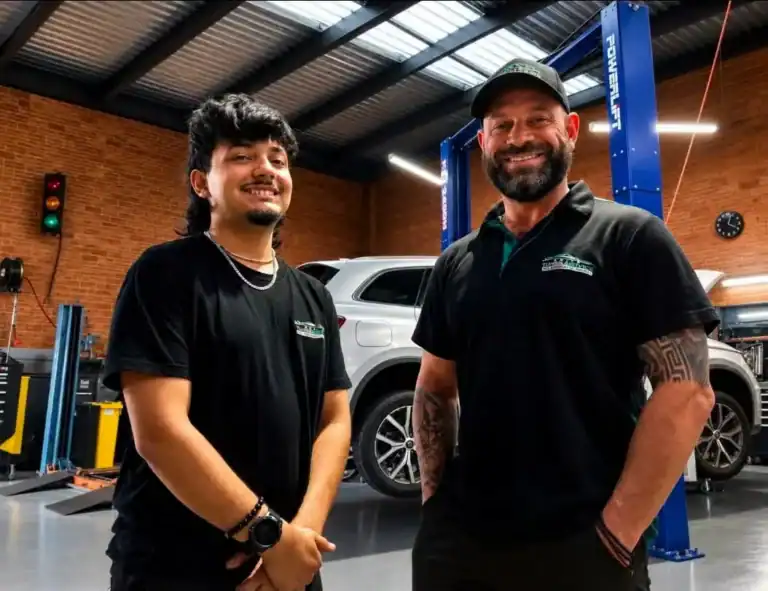
You’re not dealing with a chain quick-fit centre that treats your gearbox as one of fifty identical jobs. You’re working with an owner-operator who takes pride in getting things right the first time. We explain what we find, walk you through your options, and let you decide what happens next. No pressure, no jargon maze.
Next Steps
If your Ford is showing transmission warning signs, the sooner you have it checked, the better. Call Us Today to arrange a diagnostic inspection, or Book Your Free Inspection online. We’ll get your car on the ramp, run it through our tests, and give you a clear picture of what’s happening and what needs to happen next.