Your Ford’s drive belt is one of those parts that keeps everything running smoothly behind the scenes. It drives the alternator, power steering pump, water pump, and air conditioning compressor all at once. When it wears out, your Ford stops working properly. A worn or cracked drive belt can leave you stranded, so understanding when you need Ford drive belt replacement and what the process involves helps you stay ahead of trouble. If you’re in Kirrawee or the wider Sutherland Shire, catching belt wear early means avoiding a roadside breakdown.
Signs Your Ford Drive Belt Needs Replacement
Drive belts don’t fail without warning. Most Fords show clear symptoms weeks or even months before the belt snaps completely. Catching these early means you avoid a breakdown on the road.
- Squealing noise from the engine, especially when you start the car or accelerate
- Visible cracks, fraying, or glazing on the belt surface when you open the bonnet
- Loss of power steering assistance or stiff steering wheel
- Dimming dashboard lights or flickering interior lights
- Engine overheating or temperature gauge running higher than usual
- Air conditioning blowing warm air
Ford models vary in how quickly belts wear. Some Fords run 60,000 km before needing attention; others stretch to 100,000 km depending on driving conditions and belt quality. The Ford service schedule is your best guide, but symptoms never lie. If you hear squealing or spot visible wear, don’t wait for the next service interval.
What We Do: Ford Drive Belt Replacement Step by Step
Ford drive belt replacement sounds straightforward, but the process involves more than just pulling off the old belt and threading on a new one. We inspect the entire system to make sure nothing else is about to fail.
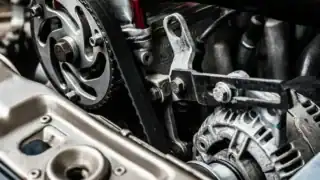
First, we run a visual inspection of the belt itself and check the tensioner and idler pulleys that keep the belt tight and spinning smoothly. Many Ford drive belts fail early because the tensioner has worn out, putting uneven stress on the rubber. If we spot a worn tensioner, replacing the belt alone would be a temporary fix. We recommend addressing both at the same time.
We then remove the old belt carefully, clean any debris from the pulleys, and check the water pump and alternator bearings for noise or rough spinning. These components often show wear at the same time as the belt. If they’re on their way out, we’ll let you know upfront so you can decide whether to replace them now or monitor them.
For Ford vehicles, we use genuine or OEM-equivalent belts that match Ford’s original specifications for your model year. The belt width, tooth profile, and length must be exact, otherwise tensioning won’t work correctly and the belt will slip or wear prematurely. We then route the new belt through the pulley system exactly as Ford designed it, set the correct tension, and run the engine to confirm everything spins smoothly and silently.
The entire job typically takes one to two hours for most Ford models, depending on engine layout. Some Fords have tight engine bays or multiple belts that need coordinated replacement, which takes longer. We’ll give you an honest timeframe once we assess your vehicle.
What Affects Cost and Time for Your Ford
A few variables shape the final bill and how long you’ll be without your car.
Belt type. Ford models use different belt designs. Some have a single serpentine belt that drives multiple components; others use separate belts for different systems. Single belts cost less but drive more components, so failure affects more of your car. Multiple belts cost more upfront but isolate failures to one system.
Tensioner condition. If the tensioner has worn out, it needs replacement along with the belt. Tensioners are wear items that don’t last forever, and replacing the belt without the tensioner is false economy.
Engine access. Some Ford engines sit compactly, making belt access straightforward. Others require removing air boxes, hoses, or covers to reach the belt safely. More access work means longer labour time.
Parts quality. We stock genuine Ford parts and trusted aftermarket equivalents. Genuine parts cost more but match Ford’s exact specifications and carry warranty protection. Aftermarket parts offer savings without sacrificing quality if they’re from a reputable supplier. We’ll discuss your options and let you choose.
Why Shire Tune & Service for Your Ford in Kirrawee
We’ve been servicing Fords across Kirrawee and the wider Sutherland Shire for over 18 years. Ford drive belt replacement is routine for us, and we’ve seen nearly every engine layout and belt configuration Ford has produced.
We use up-to-date diagnostic equipment to inspect not just the belt but the entire accessory drive system. A squealing noise might be the belt, or it might be a failing alternator bearing. We find the actual cause rather than replacing parts and hoping the noise stops.
Your Ford’s warranty is protected when you service with us. We use genuine or OEM-equivalent parts, follow Ford’s service schedules, and keep detailed records of all work. You won’t lose warranty cover by choosing an independent workshop instead of a dealership.
We price fairly and explain exactly what needs doing and why. No surprises, no pressure to replace parts that are fine. If the belt is due but the tensioner is healthy, we’ll tell you that honestly. If both need work, we’ll explain why and let you decide.
Don’t Let a Worn Belt Leave You Stranded
If you’ve noticed squealing from your Ford’s engine or spotted a worn belt, don’t ignore it. A drive belt failure can leave you stranded and potentially damage other components. Book Your Free Inspection today, or Call Us Today to let us know what you’ve noticed and we’ll advise you on the best next step for your Ford.