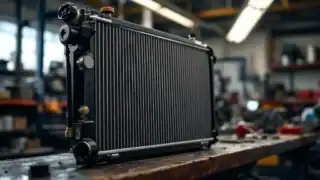
Your Toyota’s water pump is a critical component that keeps coolant moving through the engine. Without it, your car overheats within minutes, risking serious engine damage. Toyota water pump replacement is one of those services that doesn’t happen often, but when it does, it needs to be done properly by someone who understands Toyota’s cooling system architecture. We’ve been servicing Toyotas in Kirrawee for over 18 years, and we see water pump failures across the range from Corollas to Landcruisers. This guide explains what a water pump does, how to spot trouble, and what to expect when yours needs replacing.
Signs Your Toyota’s Water Pump Is Failing
A water pump doesn’t usually give much warning before it fails completely. Here are the real symptoms that should bring you in for inspection:
- Your coolant temperature gauge climbing toward the hot zone, especially in traffic or uphill driving
- Sweet-smelling fluid pooling under the engine bay or visible on the ground where you park
- A grinding or squealing noise from the front of the engine, particularly when the engine first starts
- White steam rising from under the bonnet, especially after you’ve been driving hard
- Your engine knocking or pinging, which can indicate overheating
- Visible coolant leaks at the water pump housing itself
If your Toyota is over 150,000 kilometres, age alone is a good reason to have us inspect it. Water pumps wear internally and externally. A bearing can fail suddenly, or a seal can degrade until it leaks. Catching a slow leak before it becomes a catastrophic overheat saves your engine from warping or cracking the head.
What Happens During Toyota Water Pump Replacement in Kirrawee
We start by confirming the pump is actually the problem. Many symptoms that point to the water pump can come from a faulty thermostat, a low coolant level, or a blocked radiator. We’ll run diagnostics and a visual inspection to rule out other causes before recommending replacement.
If the water pump needs replacing, here’s what the job involves:
- Draining the coolant system safely and disposing of it properly
- Removing the serpentine belt or timing belt cover, depending on your Toyota model
- Unbolting the old pump and cleaning the mounting surface thoroughly
- Installing a genuine or OEM-equivalent Toyota water pump with a new gasket and seals
- Refilling the system with Toyota-spec coolant and bleeding air from the lines
- Testing the system under load to confirm the temperature gauge stays stable
Toyota water pumps are engineered to tight tolerances. Using the correct OEM-spec replacement ensures the pump matches your engine’s flow requirements and integrates with Toyota’s cooling system logic. Aftermarket pumps sometimes differ in impeller design or bearing preload, which can reduce cooling efficiency or cause premature failure.
On some Toyota models, particularly Landcruisers and Corollas with timing belt engines, accessing the water pump means removing the timing belt cover or even the belt itself. This is why the job complexity varies. A straightforward pump swap on a Camry takes less time than a full belt job on an older Corolla. Either way, we don’t rush it. A water pump install done carelessly can leave air pockets in the cooling system or create misalignment issues that come back to haunt you in summer.
What Affects Cost and Turnaround Time
Three main factors shape the scope of a Toyota water pump replacement:
Your specific Toyota model. A pump replacement on a newer Yaris or Prius is a straightforward job. A Landcruiser with a timing belt, or an older Corolla where the pump sits deep in the engine bay, takes longer. We’ll tell you up front which category your vehicle falls into.
Whether the thermostat or belts need attention at the same time. Many workshops recommend replacing the thermostat and serpentine belt together with a water pump, since you’re already into the cooling and drive systems. We’ll inspect and give you honest advice. If your belt is near the end of its service life, replacing it while we have the system open makes sense. If it’s fine, we won’t upsell you.
Parts availability and your preference between genuine and equivalent parts. We stock genuine Toyota parts or equivalent OEM-spec components that meet Toyota’s engineering requirements. Genuine parts carry longer lead times sometimes but give you the assurance of exact fitment. Equivalent parts are usually available faster and cost less, while still meeting Toyota’s specifications.
We’ll provide a clear estimate before we start, so you know exactly what you’re paying and why.
Why Choose Shire Tune & Service for Your Toyota Water Pump Replacement
We’ve been diagnosing and repairing Toyota cooling systems since 2006. Our technicians understand the quirks and tolerances of Toyota engineering, and we have the diagnostic equipment to confirm a water pump fault rather than guessing based on symptoms alone. Many quick-fit shops will replace a pump based on overheating alone, costing you money if the real issue is a faulty thermostat or low coolant. We test and measure first.
We use genuine Toyota parts or OEM-equivalent components, never cheap aftermarket pumps that fail in two years. Your warranty on the work is backed by our 30+ years of experience and our track record here in Kirrawee. If something goes wrong with the install, we fix it. No finger-pointing.
We’re an independent workshop, not a dealership. That means fair, transparent pricing without the upsell pressure. We’ve built our reputation on honest advice, and that includes telling you when a water pump really needs replacing and when it doesn’t.
Get Your Toyota Checked in Kirrawee Today
If your Toyota’s temperature gauge is climbing, you’re seeing coolant leaks, or you’d just like peace of mind on an older vehicle, book your free inspection. We’ll diagnose the cooling system properly, explain what we find, and give you a clear path forward. Book Your Free Inspection online or Call Us Today to get your Toyota checked.