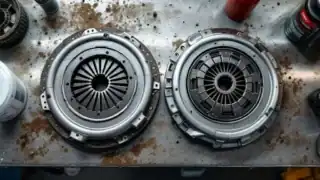
BMW clutch repair is one of those jobs that separates a workshop that understands European cars from one that just turns spanners. A failing clutch on a BMW isn’t simply a worn friction surface—it’s often a symptom of how the car was driven, how the hydraulic system is working, or whether previous work was done correctly. At Shire Tune & Service in Kirrawee, we’ve spent over 30 years working on European vehicles, and BMW clutch repairs have taught us that rushing the diagnosis or cutting corners on parts selection costs owners far more in the long run.
How to Recognise a Failing BMW Clutch
The first warning signs are usually subtle, which is why many drivers don’t act until the car becomes undriveable. Common symptoms include a soft or spongy clutch pedal that doesn’t feel like it’s engaging smoothly, a burning smell when you drive (especially after heavy traffic or hill starts), or difficulty getting the car into gear, particularly first gear or reverse. Some drivers notice the engine revving but the car not accelerating as it should—this is clutch slip, and it means the friction material has worn past the point where it can grip the flywheel properly.
- Clutch pedal feels higher than usual or sits at a different point in the travel
- Grinding noise when trying to engage the gearbox
- Car lurches or judders when moving off from a standstill
- Loss of power delivery, especially under load or acceleration
- Difficulty selecting gears, or gears popping out while driving
BMW models built in the past 15 years often use a single-mass flywheel combined with a dual-friction clutch plate, which is efficient but sensitive to driving style and maintenance. If the clutch is slipping or the engagement is inconsistent, ignoring it doesn’t make it cheaper to fix—it usually makes it worse, because the failing clutch then damages the flywheel, which then needs replacement too.
What Happens During a BMW Clutch Repair in Kirrawee
We don’t just swap a clutch plate and hope for the best. BMW clutch work requires a methodical approach because the condition-based servicing that BMW owners rely on depends on accurate diagnostics from the start.
First, we listen and drive. Before pulling the car apart, we need to understand exactly what the clutch is or isn’t doing. We’ll take it for a test to feel the pedal response, check for slip under load, and listen for any hydraulic noises. This tells us whether the fault is in the friction material, the hydraulic actuation, or the flywheel itself—and that distinction matters enormously for what we order and how long the job takes.
Next comes a full inspection. We remove the gearbox to access the clutch assembly, then we measure flywheel runout and surface condition with precision tools. A worn or damaged flywheel needs resurfacing or replacement; a flywheel that looks fine can sometimes be reused, but reusing a worn flywheel with a new clutch is false economy. We also inspect the release bearing, the pressure plate, and the spigot bearing, because if any of these are worn, replacing just the clutch plate wastes the labour.
For parts, we fit genuine BMW-specification clutch assemblies or quality equivalent components that meet OEM specifications—not budget aftermarket kits that fail within 12 months. We use the right hydraulic fluid for your model and bleed the system properly to remove air. BMW models from 2010 onwards often need pressure sensor re-learning after a clutch replacement, which requires our diagnostic equipment to perform correctly and prevent fault codes.
What Affects the Cost and Timeline for Clutch Repair
Labour is the biggest variable. Removing the gearbox on a BMW to access the clutch is a full day’s work minimum, sometimes longer depending on engine bay layout and whether additional components need attention. A 3 Series is generally quicker than a 5 Series or an X5; an automatic gearbox takes longer than a manual.
Flywheel condition is the second big factor. If the flywheel can be resurfaced rather than replaced, you save cost and time. If it’s damaged beyond resurfacing tolerance, replacement adds labour and parts cost. We won’t know until we’re inside, which is why we always check with you before proceeding if additional work is needed.
Parts availability affects timing too. Genuine BMW parts usually arrive within a few days; equivalent OEM-spec alternatives sometimes faster. We don’t delay repairs waiting for parts—we keep you informed every step and work around your schedule where possible.
Why Shire Tune & Service for Your BMW Clutch Repair
We’re European vehicle specialists with 30+ years’ hands-on experience and 18 years local to Kirrawee and the Sutherland Shire. We don’t treat every car the same—BMW diagnostics and repair procedures are different from Japanese models, and we know the specifics of condition-based servicing and how a clutch repair integrates with your BMW’s service history and warranty protection.
We use up-to-date diagnostic equipment to read fault codes, perform sensor re-learning, and ensure that pressure-sensitive clutch systems are calibrated correctly after repair. We fit genuine or equivalent parts that meet BMW specification, and we guarantee that your warranty protection remains intact. Our pricing is fair and transparent—no surprises, no upselling you parts you don’t need.
Book Your Free Inspection or Call Us Today to discuss your BMW clutch concerns. We’ll diagnose the fault properly and give you an honest assessment of what needs doing and why.